
Future of Work with AI: Will Entry-Level Jobs Disappear?
Anthropic CEO Dario Amodei warns that 50% of entry-level jobs could vanish within years. David Lott analyzes the future of work with AI and what CISOs must do now.

David Lott
on
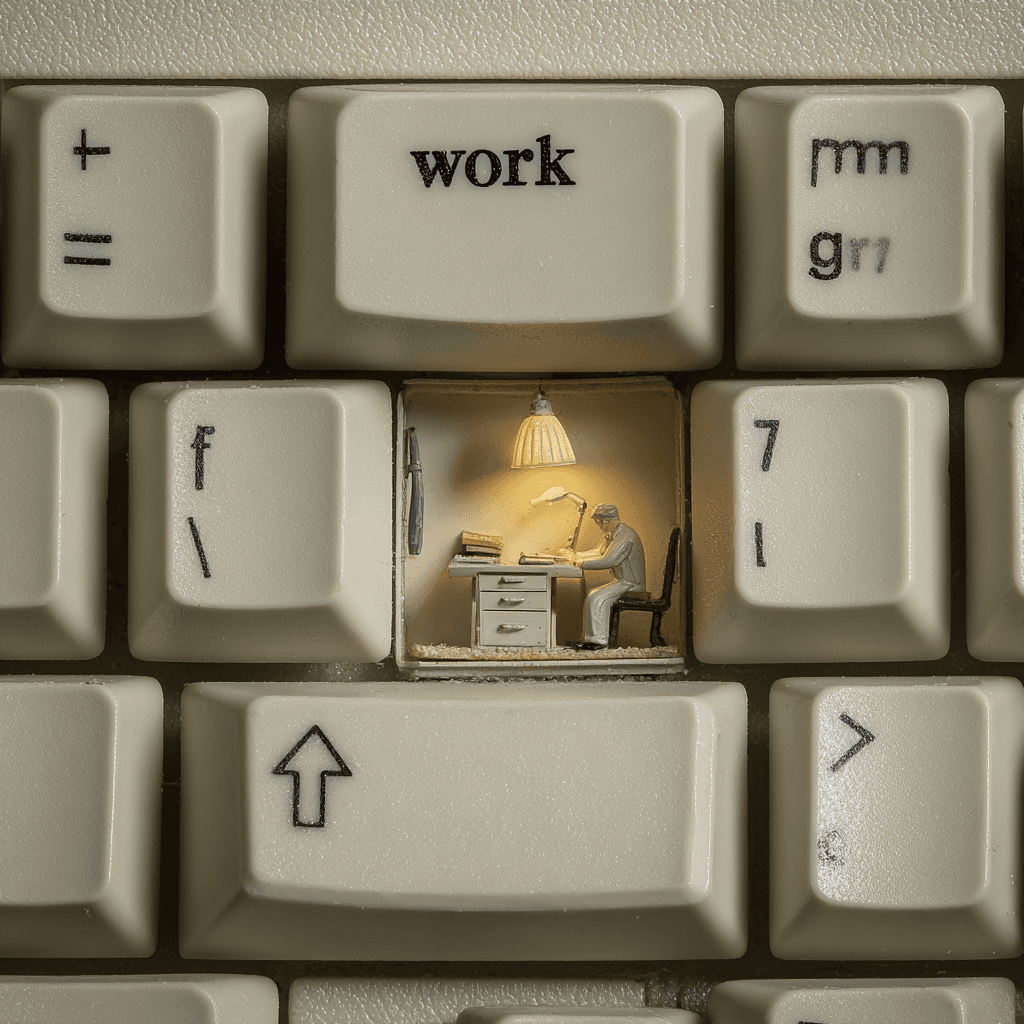
Future of Work with AI: Will Entry-Level Jobs Disappear?
Is AI taking away our jobs? No, not all of them. But if we listen to the latest forecasts from Silicon Valley, the "entry-level" position as we know it might be on the brink of extinction.
As a founder dealing with sovereign AI daily, I see the immense potential of these models. But I also see the disruption. The latest warning comes from Dario Amodei, CEO of Anthropic. And unlike the usual hype, this warning is specific, time-bound, and uncomfortable for many decision-makers.
Short on time? Here is the compact video summary:
The 5-Year Deadline for Repetitive Work
Amodei didn't mince words in his recent interviews. He predicts that within the next 1 to 5 years, many repetitive entry-level jobs could simply disappear. We aren't talking about blue-collar automation here; we are talking about the junior lawyers, the administrative assistants, and the financial analysts.
The logic is ruthless but sound: Junior roles often consist of document review, basic data synthesis, and repetitive writing. These are "variable but repetitive" tasks—the exact sweet spot where Large Language Models (LLMs) currently excel.
If a model can review a contract in seconds for a fraction of a cent, the business case for a first-year associate billing by the hour collapses. But Amodei goes a step further. He claims that many CEOs aren't looking at AI primarily to augment their staff—they want to ruthlessly cut costs.
The Industry Divide: Augmentation vs. Replacement
This creates a massive rift in the tech world. On one side, you have the optimists (and those protecting their stock prices). Nvidia’s CEO Jensen Huang dismisses the "job apocalypse," arguing that jobs will merely change. OpenAI’s Sam Altman echoes this, suggesting that society will simply create new, better roles.
On the other side, you have the realists. Ford CEO Jim Farley stated he expects "literally half" of office jobs to be replaced.
Who is right? From my perspective as a strategist, the truth lies in the middle, but closer to the disruption than many admit. We aren't facing a total apocalypse, but we are facing a massive shift in how we define "work."
The Shift: From "Doing" to "Managing"
What does this mean for us as leaders and for the talent we hire?
We need to stop training people to be fast at repetitive tasks. Speed is no longer a human competitive advantage. The new skill is not doing the work—it is managing the AI that does the work.
In the future, a "Junior" employee won't be someone who drafts emails or compiles Excel sheets. A Junior will be someone who:
Orchestrates three different AI agents to complete a complex workflow.
Validates the output for hallucinations and errors.
Understands the security implications of the data they are feeding the model.
This is where the concept of Sovereign AI becomes critical. If your workforce shifts from producing to managing AI, the platform they use becomes your most critical infrastructure. You cannot build the future of your company on a "black box" that sends your intellectual property to US servers for training data.
What IT Decision Makers Must Do Now
If Amodei is right—and the timeline is 1 to 5 years—we don't have time to wait and see.
Redefine Junior Roles: Don't hire for rote memorization. Hire for critical thinking and systems understanding.
Secure the Infrastructure: As AI becomes the engine of your entry-level work, ensure that engine is secure. Using public, unsecured AI tools for corporate strategy is a negligence we can no longer afford.
Focus on "The Manager's Skillset": Upskill your current team not just on "how to use ChatGPT," but on how to evaluate, verify, and integrate AI outputs into business decisions.
The jobs aren't just disappearing; they are evolving into something higher-leverage. The question is: Is your infrastructure ready to support that evolution securely?
Ready to secure your company's AI future? Don't leave your data sovereignty to chance while automating your workflows. Try SafeChats today and see how you can deploy powerful AI that stays under your control.