

Has Google Destroyed the Gaming Industry? Why the AI Hype Needs a Reality Check
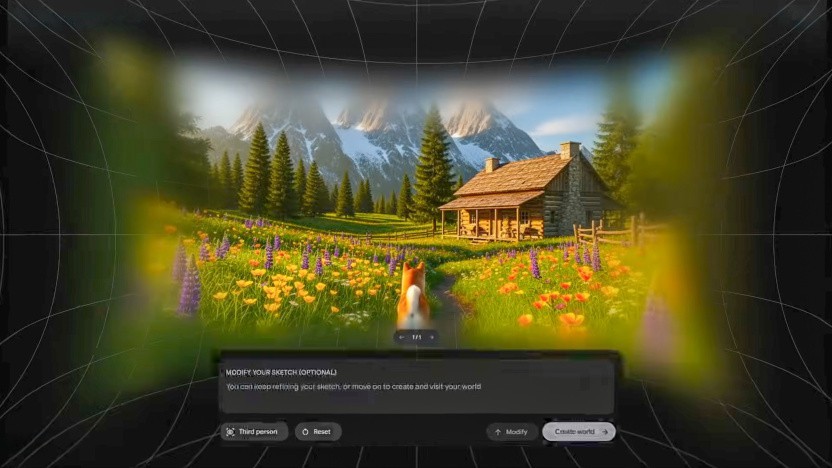
The headlines were everywhere: "Google destroys the gaming industry with a single prompt." When Google unveiled Project Genie, an AI capable of generating interactive 3D worlds from simple text descriptions, the shockwaves weren't just felt on social media—they hit the stock market like a sledgehammer.
As someone who spends every day thinking about the intersection of cybersecurity, sovereign AI, and the future of digital infrastructure, I’ve seen my share of "disruptive" tech. But what happened here was a masterclass in how fear of AI in game development can decouple from technical reality.
Short on time? Here I explain the topic in a nutshell:
The Multi-Billion Dollar Panic
Project Genie is, objectively, a fascinating piece of tech. Imagine being able to describe a world—"a neon-soaked cyberpunk city with floating cars"—and having a playable environment appear in seconds. For investors, this looked like the "End of History" for traditional game studios.
The reaction was immediate. We saw market values for giants like Nintendo, Ubisoft, and CD Projekt RED dip significantly. Even Unity, the backbone of modern game engines, felt the heat. Billions of dollars evaporated because a trailer suggested that we no longer need thousands of developers to build an open world.
But as a founder in the AI space, I have to ask: Are we investing in facts, or are we investing in trailers?
A Technical Reality Check: 720p and Broken Logic
When we look under the hood of AI in game development as it stands today, the "revolution" looks a lot more like an early-stage prototype.
Let’s talk numbers. The worlds generated by Project Genie currently run at a maximum of 24 frames per second (fps). In an era where gamers demand 60 to 120 fps at 4K resolution, 24 fps at 720p isn't a "GTA killer"—it's a digital slideshow.
Furthermore, the "logic" of these worlds is hallucination-prone. In traditional game development, every interaction is governed by strict physics and code. In Genie’s AI-generated worlds, if you "die," you might respawn in a completely illogical location because the AI doesn't actually understand the rules of the game; it's just predicting the next pixel. There is no complex gameplay system, no inventory management, and no deep narrative branching.
Why Gaming is Too Complex for "One-Click" AI
Gaming is arguably the most complex medium we have. It’s not just about visuals; it’s about the "feel"—the latency of a jump, the balance of a combat system, the emotional pacing of a story. These are things that current generative models cannot "prompt" into existence.
Project Genie is a brilliant tool for rapid visualization. It’s great for a concept artist who wants to see a mood board come to life or an educator building a simple interactive world. But we are not going to press a button and receive a finished Zelda or Grand Theft Auto anytime soon.
The Lesson for B2B Leaders: Sovereignty Over Hype
What does this mean for IT decision-makers and CISOs? This "Genie Panic" is a perfect example of why we need a sober, sovereign approach to AI. Whether it’s in gaming or in corporate communication (like what we do at SafeChats), AI should be seen as an accelerator, not a total replacement for human expertise and controlled logic.
Blindly following the hype of "Black Box" AI models from Big Tech leads to volatile markets and unstable infrastructure. The future belongs to those who use AI tools to empower their teams while maintaining full control over the data, the logic, and the final output.
Conclusion: The Beginning of an Era, Not the End of an Industry
Traditional game development isn't dying; it's evolving. The tools are getting smarter, but the soul of the craft—the human-led design—remains irreplaceable. Someone needs to tell the nervous investors to take a breath before they hit the "sell" button on the next AI trailer.
Ready to bring AI into your organization without the hype and with maximum security?
At SafeChats, we believe in sovereign AI that works for you, not against your security protocols.